Erzurum Ehram: Anatolia’s Oldest Known Weaving Technique
Regional Identity and Cultural Function
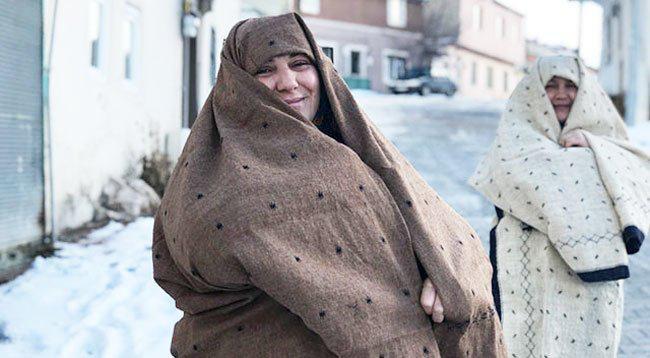
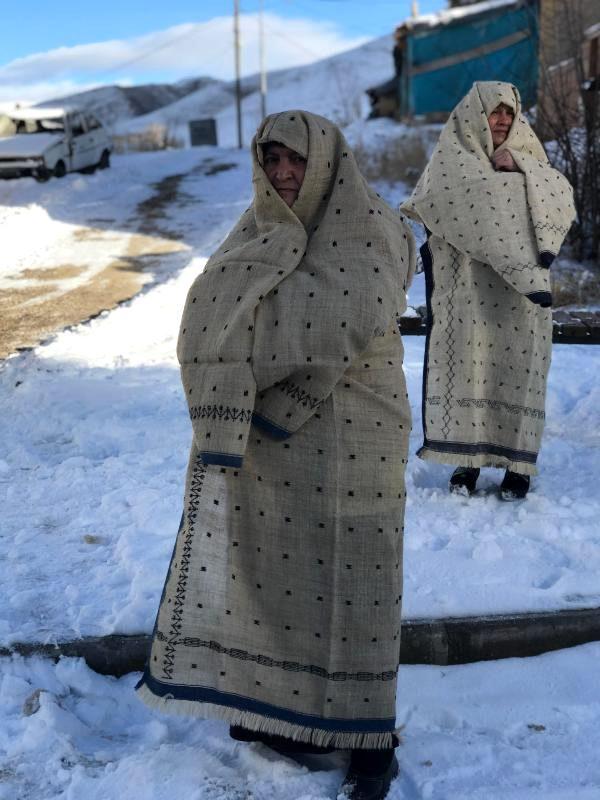
Ehram, a traditional woollen outer wrap, is associated with the regions of Erzurum, Elazığ and Bayburt in Eastern Anatolia. It is regarded as one of the oldest known weaving traditions in Anatolia. For generations, local women have worn it when leaving their homes. The garment provides insulation against the region’s harsh continental climate, protecting the wearer from the cold during the long winter months. At the same time, the natural properties of wool help regulate body temperature in warmer weather.
Beyond its practical function, ehram carries important social information. Its motifs, the way the cloth is wrapped and its natural ground colour communicate the wearer’s social position, marital status and age. In this way, the garment serves as a non-verbal system of communication within the community.
History, Origins and Development
Written records show that ehram has been widely woven and used in its present form in the region since at least the 1850s. The origins of seamless woollen coverings date back to antiquity, the Roman period and early Islamic civilisations. The distinctive development of ehram in Anatolia was shaped by climatic needs and the need for practical protection against seasonal temperature changes.
Until the last quarter of the 19th century, ehram was woven on commercial looms by male craftspeople known as culfa. As men left their homes to go to war, women increasingly brought the craft into their households. This transition transformed weaving into a domestic practice and helped preserve the technique through generations, allowing it to survive to the present day.
Raw Material and Animal Welfare
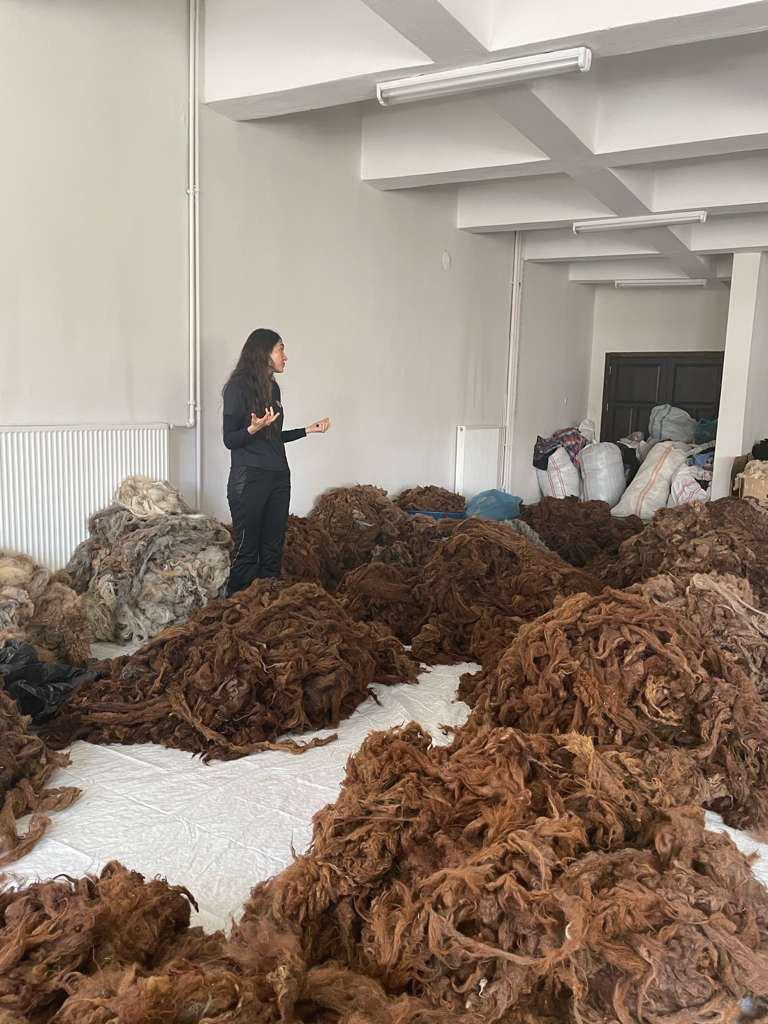
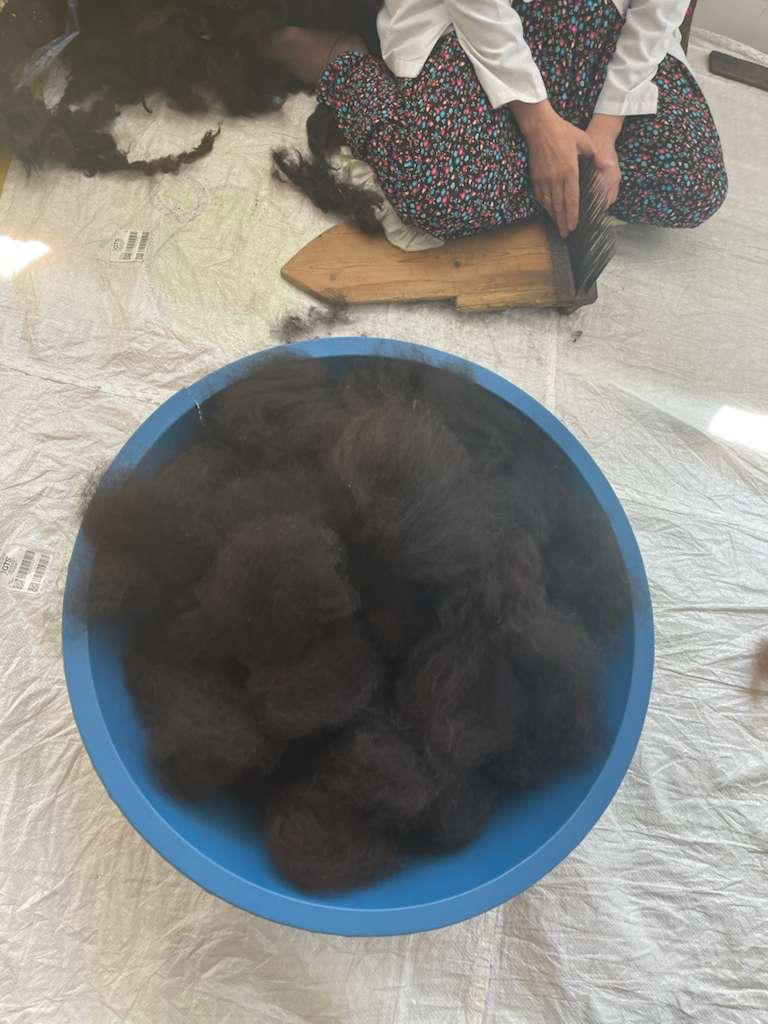
Ehram is traditionally made from pure sheep’s wool, without chemical treatment or artificial dyes. The selection of raw material follows a seasonal cycle and reflects an intimate understanding of the natural characteristics of wool.
- Shearing Period: The weaving traditionally uses the first wool shorn from young sheep, generally between six and seven months of age and under one and a half years old.
- Animal Welfare: Shearing takes place in accordance with the animal’s natural development and seasonal needs, providing relief from its fleece without causing harm.
- Fibre Properties: Wool collected during this period is valued for its long fibres, high elasticity and relatively low shrinkage when exposed to rain. These characteristics directly influence the fineness, durability and overall quality of the finished ehram.
The Social Codes of Natural Colours
The undyed natural shades of wool serve as visual markers of a woman’s age and social position within the community. Each colour carries a particular cultural meaning and reflects different stages of life.
- White / Cream: Traditionally worn by young girls and newly married women. A finely and densely woven white ehram indicates that the wearer is a konak gelini, a bride from a wealthy family. As an expression of modesty, brides traditionally wrap the cloth around themselves so that it completely covers their faces.
- Şekeri Boz / Boz (Light Brown / Beige): Traditionally associated with young mothers and women with small children. These shades represent the transition into motherhood and the responsibilities of family life.
- Mor / Cılga (Dark Brown): Although called Mor in the local dialect, the term refers to dark brown shades of wool rather than purple. These colours are traditionally worn by middle-aged and older women and heads of families, representing maturity, experience and social authority.
- Black / Charcoal Grey: Traditionally associated with elderly women and widows. These colours express mourning, devotion and withdrawal from the courtship aspects of social life.
Motif Forms and Their Symbolic Meanings
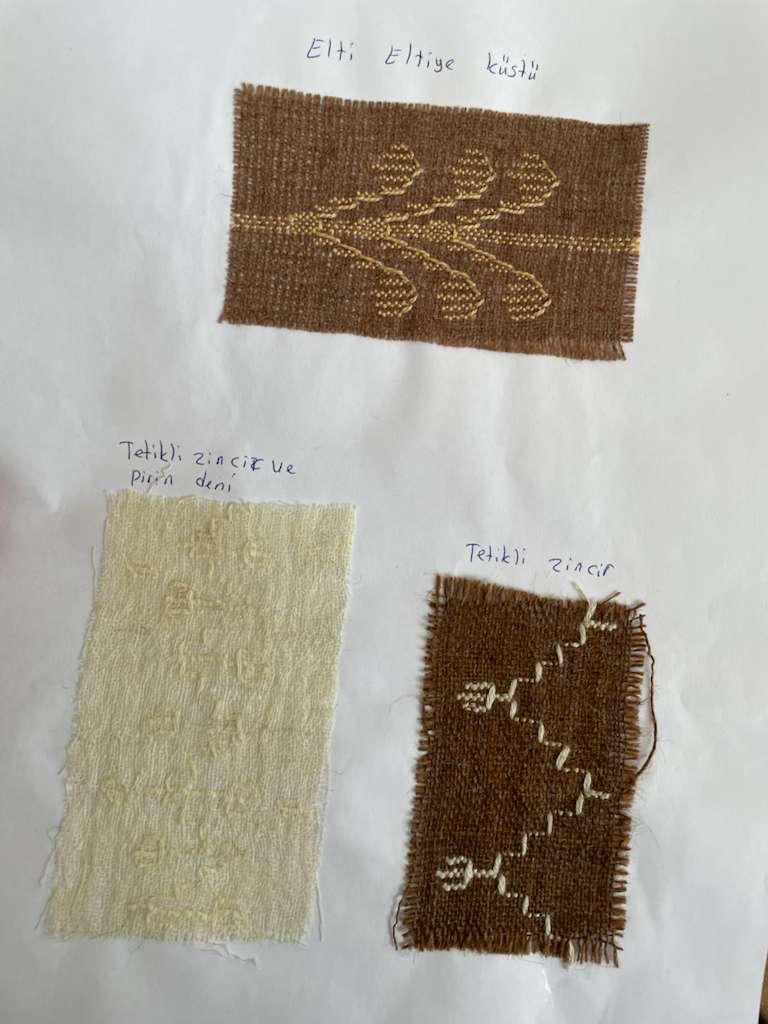
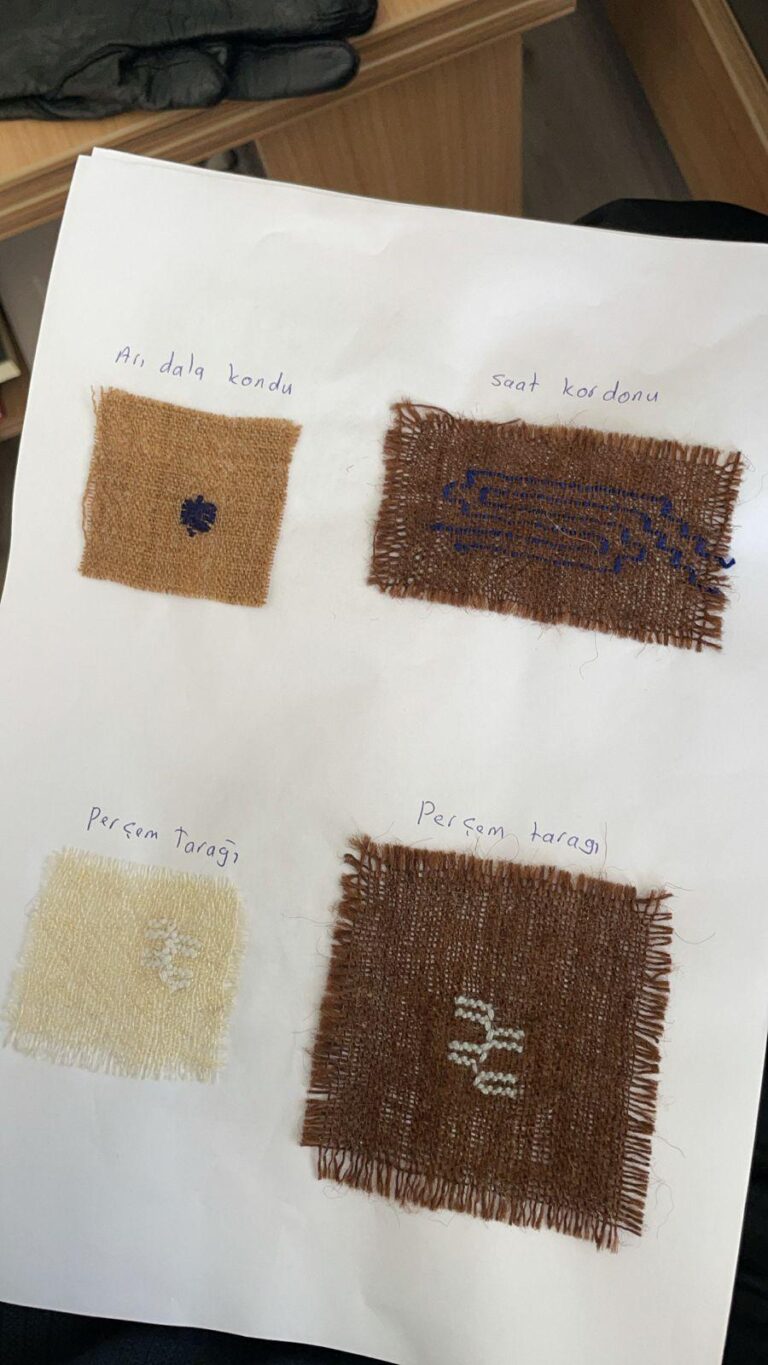
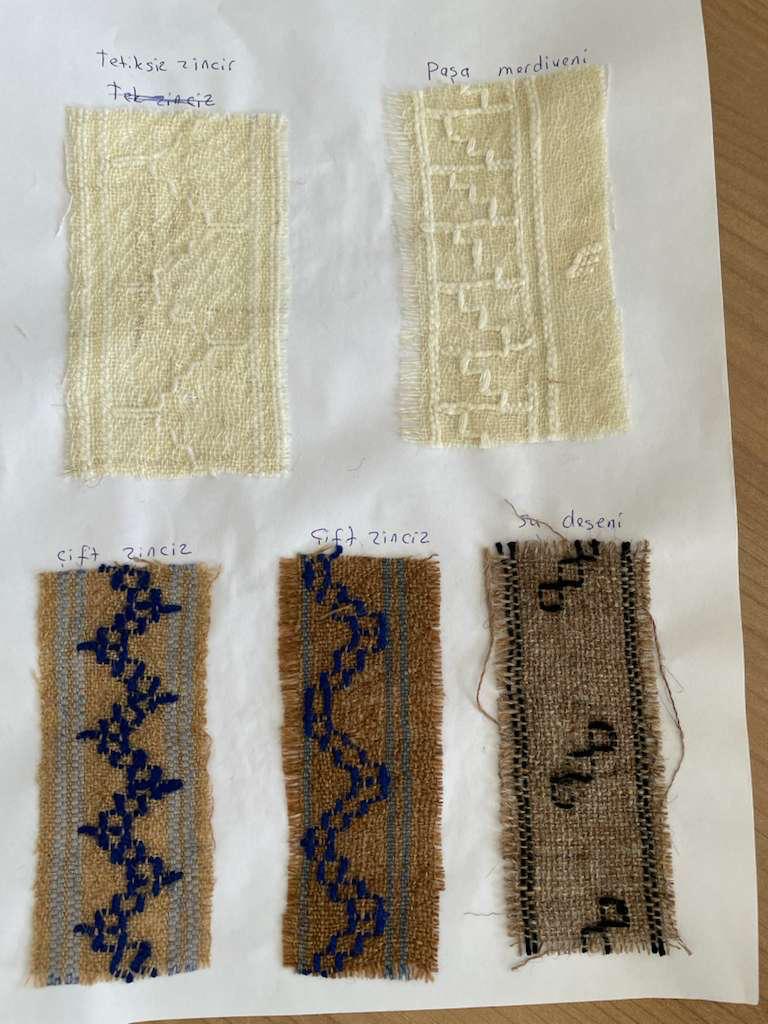
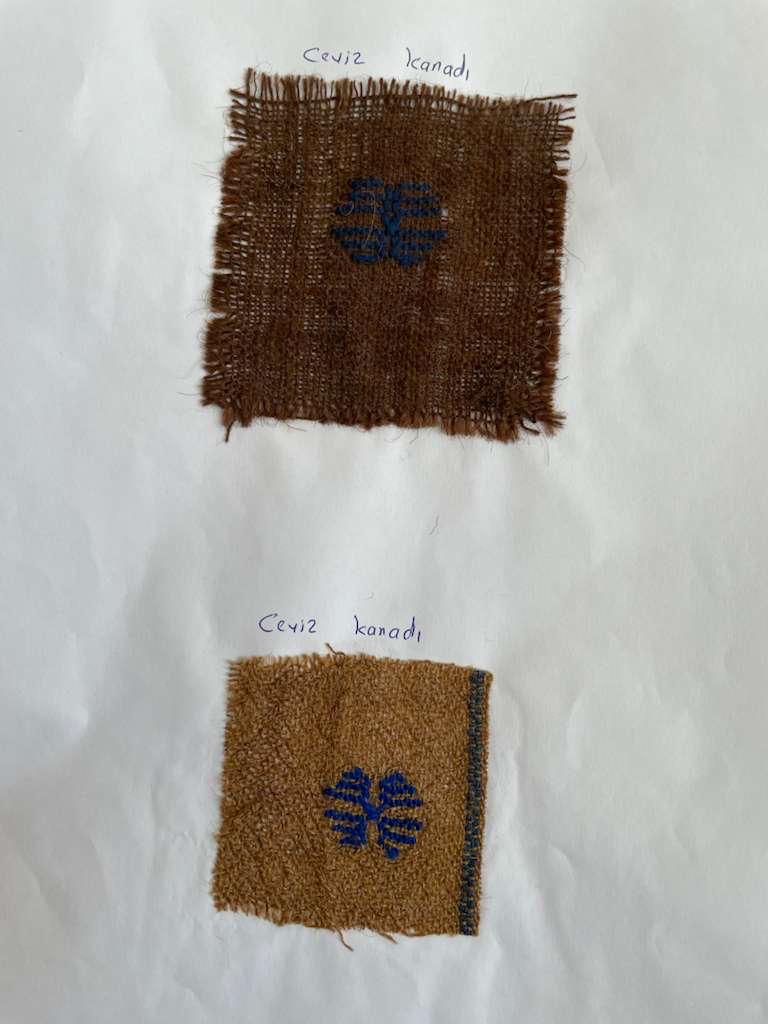
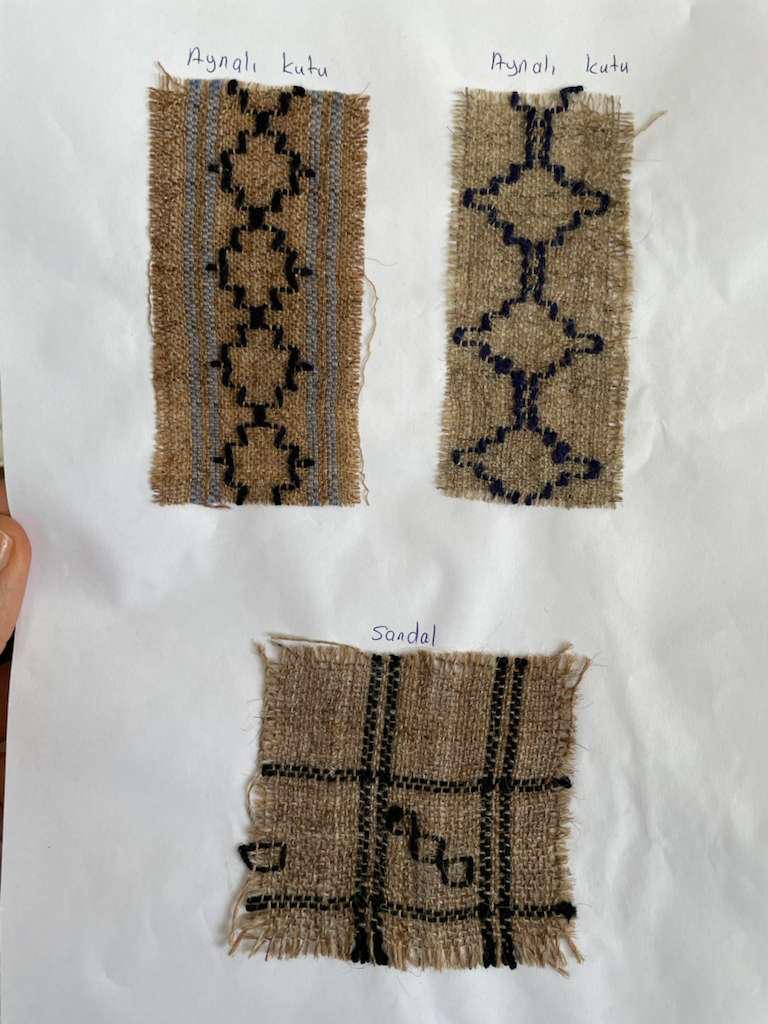
The geometric patterns woven into the surface of ehram form a visual language. They translate elements of nature, domestic life and personal feelings into textile patterns, preserving stories and cultural values through generations.
- Elti Eltiye Küstü: This motif consists of two symmetrical geometric figures woven with their backs turned towards each other. It represents disagreements, tensions and unspoken boundaries between women living under the same roof.
- Ceylan Boynuzu: Composed of stepped or zigzag forms representing the horns of wild animals found in the region, this motif conveys strength, resistance to the challenges of the landscape and the desire for protection against evil.
- Saat Kordonu: Continuous geometric bands woven close to the edges of the cloth. They symbolise the passage of time, patience and the years devoted by the weaver to her craft.
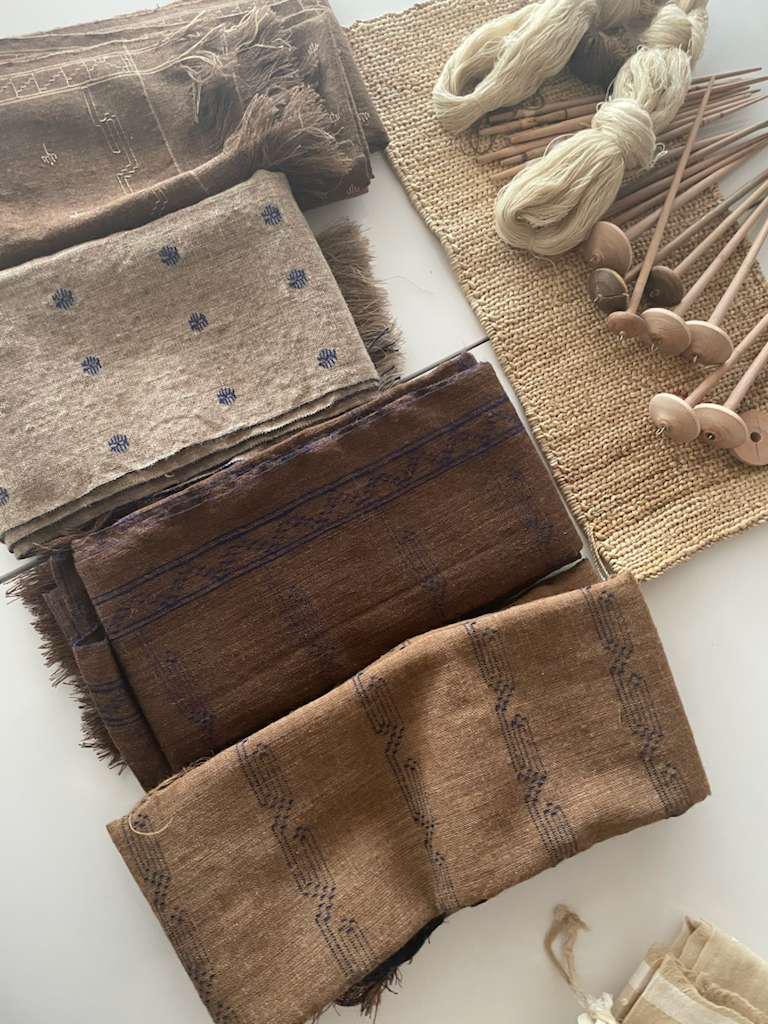
- Pirinç Deni and Mercimek Çöpü: Repeated micro-geometric dotted patterns placed across the central field. They represent agricultural production, abundance and prayers that the household never runs short of food, even in difficult climatic conditions.
- Reyhan Dalı: Small, organic, stepped chevron patterns. Named after reyhan, a fragrant herb regarded as sacred in the region, the motif represents youth, spiritual purity and protection against the evil eye.
The Traditional Weaving Process
The production of ehram involves several stages, from preparing the wool to joining the finished cloth. Each stage requires patience, technical knowledge and an understanding of the natural properties of the material.
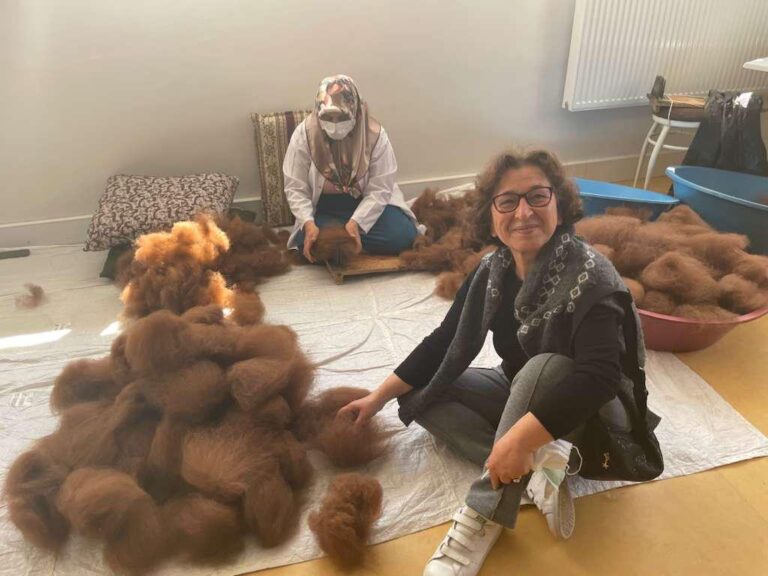
- Washing and Sorting: The shorn wool is separated according to colour, washed in cold water to preserve its natural lanolin content and left to dry.
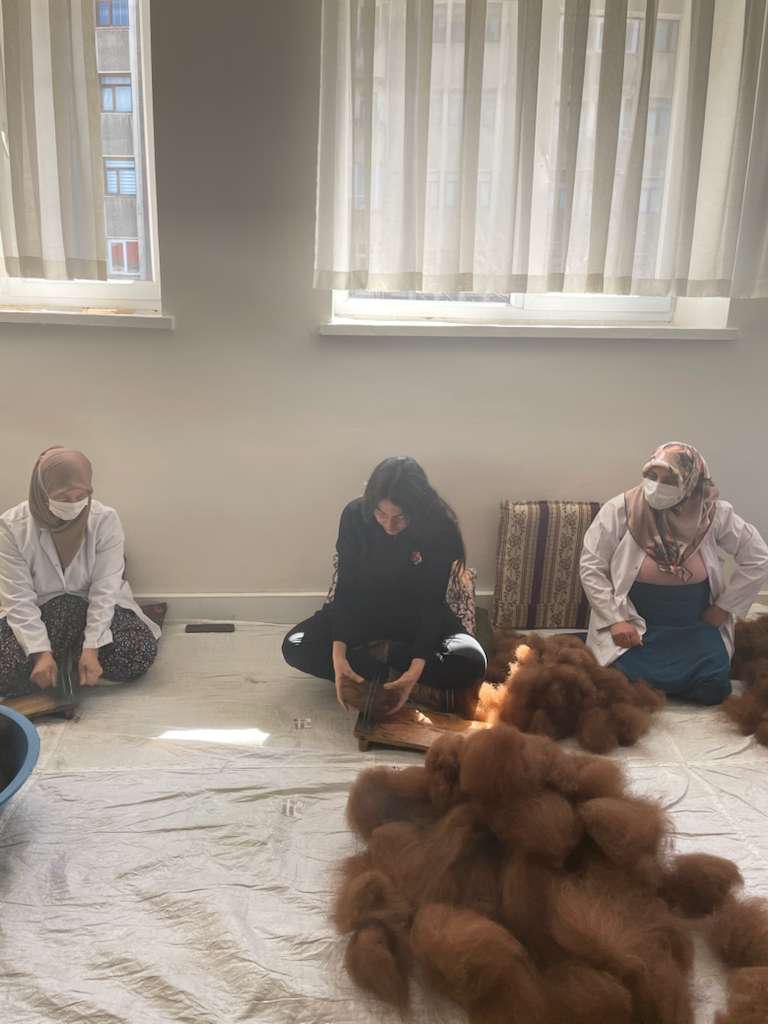
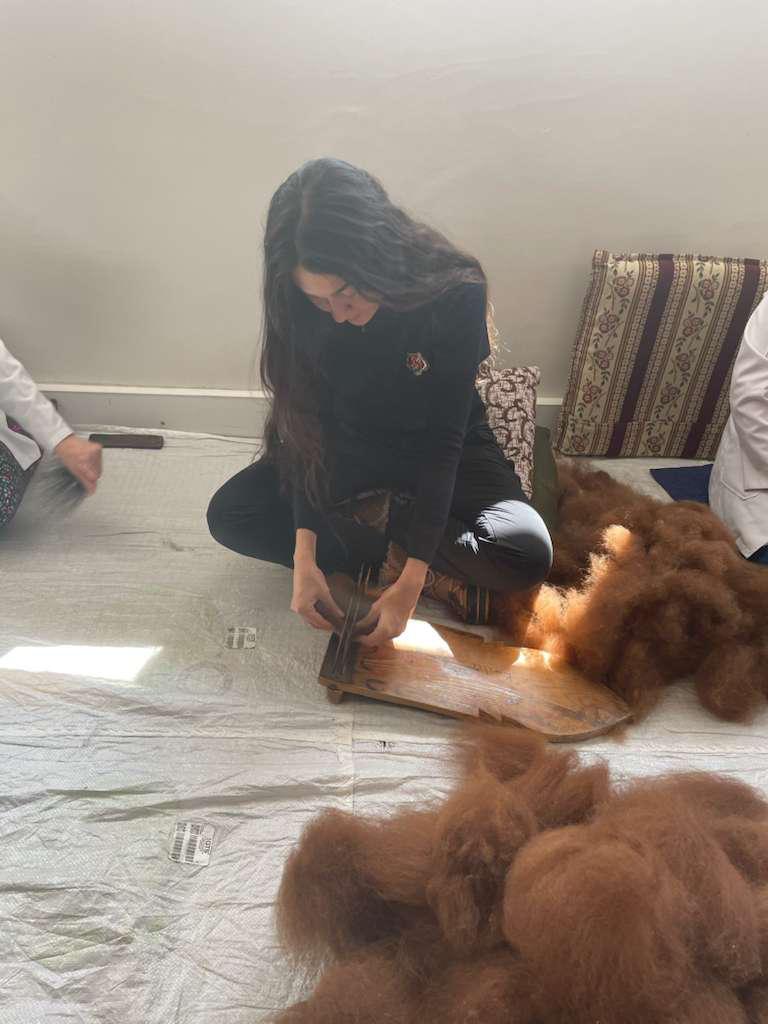
- Carding: Once dry, the wool fibres are passed through large wooden and metal wool combs to align the longer fibres and prepare them for spinning.
- Spinning: The fibres are carefully twisted into very fine yarn using hand spindles known as teşi or traditional spinning wheels.
- Preparing the Warp: Before weaving, the spun yarn is stretched between long iron rods. The tension and density of the warp threads are carefully calculated at this stage.
- Setting Up the Loom: The prepared warp threads are arranged vertically on traditional handlooms equipped with two heddles and two treadles.
- Weaving (Plain Weave): The fabric is woven using bezayağı, a plain-weave structure in which the warp and weft threads cross each other evenly. The loom width is generally around 90–100 cm.
- Joining the Panels: Two woven cloth panels, approximately 2.5 metres long, are placed side by side and sewn together down the centre. The edges are then finished to complete the ehram.
A Craft Born of Necessity
The existence of ehram is closely connected to geographical conditions, local resources and the need for protection against the climate. With limited access to external trade routes and a need to rely on locally available materials, the people of Erzurum transformed one of their most readily available resources, sheep’s wool, into a protective covering suited to their environment.
In local accounts, ehram is regarded as a symbol of patience and modesty. The fibres taken from sheep are shaped through human labour into a garment that protects the body while carrying the collective memory of the community. Its making reflects the relationship between people and their natural surroundings, bringing together locally available materials, traditional knowledge and skills passed down through generations.
Approach to Traditional Crafts
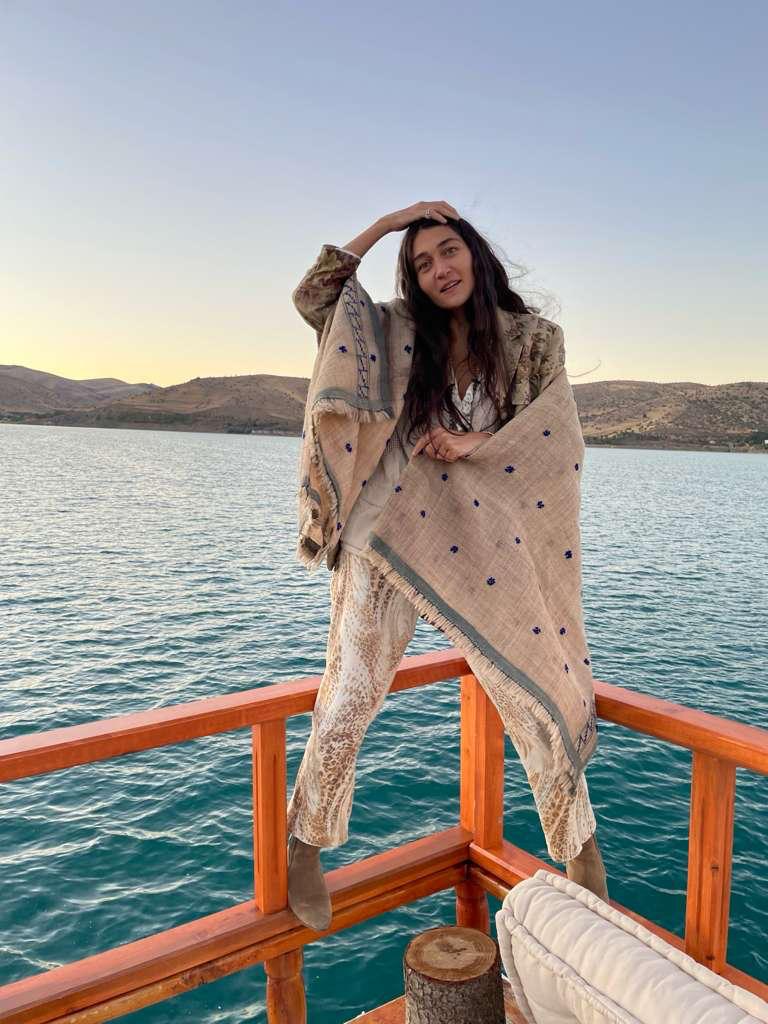
At the centre of Aslı Filinta’s design approach is the preservation, documentation and transmission of Anatolia’s craft heritage. The aim is not only to reinterpret traditional crafts, but also to protect their original forms, keep their stories visible and pass their knowledge on to future generations.
This approach extends from the natural wool and cultural colour codes of Erzurum ehram to Cimem, a wheat-straw weaving craft from Antakya, çarpana weaving and bridal textiles passed down through generations. Each craft is approached through its own techniques, materials, history and the knowledge of the people who make it.
The Aslı Filinta label presents some traditional crafts in their original forms. For others, it works directly with craftspeople to develop contemporary designs, new uses and sustainable production methods. Together, these approaches form the basis of the label’s work: treating cultural heritage not as something fixed in the past, but as a body of knowledge that continues to evolve and participate in contemporary life without losing its original character.
In this way, traditional crafts carry collective memory while allowing their stories, techniques and practices to reach new contexts and future generations.
Academic Sources and References
- Geçmişten Günümüze Erzurum’da Ehram (İhram) Dokumacılığı – Arış Journal.
- Erzurum Ehram Dokuması Üzerine Deneysel Bir Çalışma ve Motif Kataloğu – DergiPark.
- Erzurum Kültür Atlası: İhram Motifleri – Republic of Türkiye Ministry of Culture and Tourism, Culture Portal.
- Erzurum Ehramı Teknik Özellikleri – Türkiye Dokuma Atlası Project.
- Traditional Handwoven Ehram Project – Aslı Filinta Official Archive.