
Transforming Cultural Heritage into a Living Production System
Aslı Filinta’s design practice from Anatolia to the world.
Introducing a culture to the world is not merely about circulating its visual elements. It is also about how we approach the knowledge, production methods, and communities that sustain that culture. In this respect, respect for cultural heritage carries a meaning that goes far beyond preserving elements of the past. It requires cultural knowledge to be reused within contemporary life, the producers of that knowledge to be economically and socially empowered, and the relationship between the value created and the geography from which it originates to be preserved.
For Filinta, Anatolia is not a static cultural archive belonging to the past and waiting to be preserved unchanged. Rather, it is a living field of knowledge transmission—one that can be reinterpreted in new contexts, keep collective memory alive, and establish a relationship with the contemporary world. Over time, this approach has moved beyond the design object itself and evolved into a broader production model that connects cultural heritage, collective production, women’s labor, ecological responsibility, and economic development.
An academic study published in 2025 in the Journal of the Institute of Social Sciences at Kafkas University, which examines Aslı Filinta’s work through a case-study method, evaluates this practice within a similar framework. The study argues that sustainability cannot be explained solely through ecological parameters; social continuity, cultural sustainability, and economic justice must also be considered together. It further suggests that Anatolian cultural heritage functions as a catalyst capable of generating “collective benefit” within this holistic model.
Anatolia: More Than an Archive of Motifs
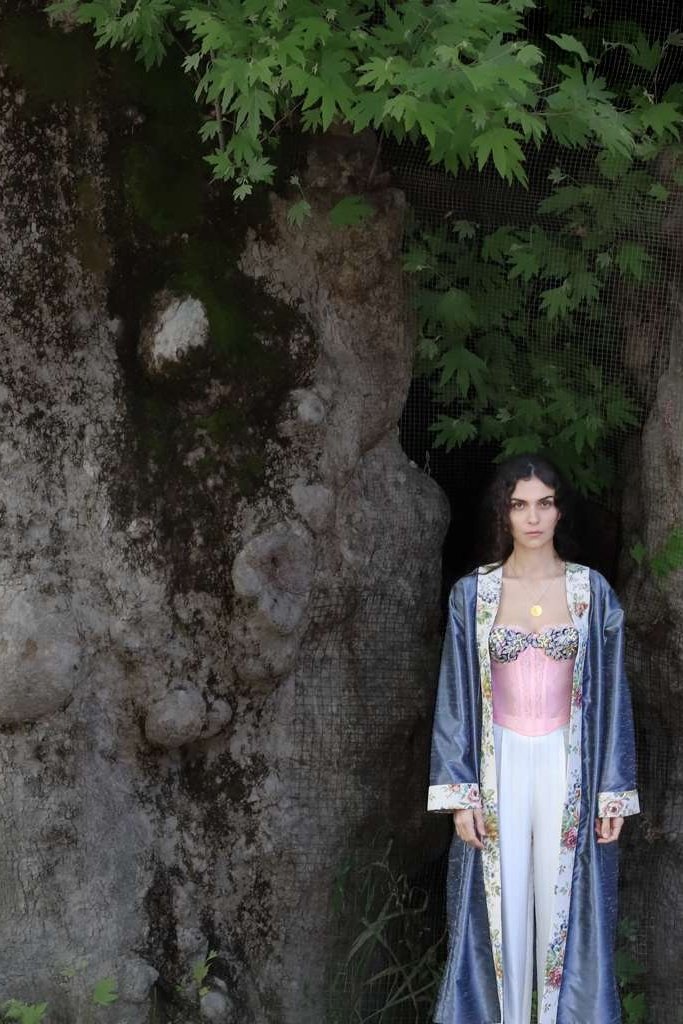
In Filinta’s design world, Anatolian culture has never been treated merely as a source of decorative motifs. From the architecture of Mimar Sinan to the maps of Piri Reis, from the narratives of Mevlânâ to İznik tiles, from kutnu textiles to Anatolian carpets, from miniatures to traditional women’s handcrafts, a broad cultural field has formed the foundation of the brand’s design language over the years.
A 2019 profile published by Vogue US drew particular attention to the pluralistic nature of Filinta’s cultural approach. The cultural geography she describes is not limited to a single ethnic or religious identity; instead, it is approached as a multilayered whole shaped by Laz, Kurdish, Circassian, Armenian, Arab, Greek, and other communities that have lived in Anatolia. In Vogue’s assessment, Filinta’s design practice stands out for its effort to reinterpret this cultural diversity within the language of contemporary fashion.
This approach also changes the role of cultural heritage in design. Here, culture is not merely a visual source that gives identity to a product; it is also a knowledge system that determines which materials are used, who participates in the production process, and within what kinds of production relationships the design takes shape. In other words, in Filinta’s practice, the issue is not simply placing an Anatolian motif onto a contemporary product. It is about exploring under what conditions that cultural knowledge can continue to live today.

From New York to Tokyo: The International Circulation of Local Memory
Born in Adana, Aslı Filinta moved to New York after studying economics at Bilkent University and gaining brief experience in the finance sector. She founded her eponymous brand in 2008 and presented her first collection in New York in March 2009. One of the brand’s first significant encounters with the international fashion world took place that same year. Her “Kisses Can Fly” collection was included in the selection of the Magazine Alive project, created in collaboration with Vogue Nippon and Comme des Garçons at Dover Street Market Aoyama in Tokyo.
In a space featuring pieces by fashion houses such as Chanel, Dior, Fendi, Loewe, Céline, Lanvin, Martin Margiela, and Marni, a young Turkish designer’s collection was also present. According to Dazed’s 2009 report, the collection was inspired by the story of Hezârfen Ahmed Çelebi and his flight from the Galata Tower with wings of his own making; the feathers on the shoulders of the jackets, the motifs of the Galata Tower, and the wings were elements of this narrative carried into the garments. This early example revealed the core method that would also appear in Filinta’s later work: translating a local narrative into a contemporary design language, rather than reproducing it in a directly folkloric form.
In later collections, this method became more systematic. The abjad numerology used by Mimar Sinan formed the basis of “The Great Sinan” collection, while the maps of Piri Reis inspired “The New World” collection prepared for Spring/Summer 2014. The maps in Piri Reis’s Kitab-ı Bahriye were transformed into textile surfaces and prints, turning a cultural document into a wearable narrative. The presence of figures from different disciplines—such as Mevlânâ, Nâzım Hikmet, painter Fikret Mualla, and opera singer Leyla Gencer—within the same design universe also shows that Filinta does not limit the concept of “culture” to handcrafts alone. In this respect, design becomes less about producing objects that represent the past and more about functioning as a translation mechanism that enables cultural memory to circulate across different periods and geographies.
The Moment When Space Becomes Part of Design: Zülfaris
One of the visible examples of this thinking took place during Istanbul Fashion Week in 2019. Aslı Filinta presented her collection in Karaköy, at the historic Zülfaris Synagogue, which had once hosted the Museum of Turkish Jews and was later transformed into an art gallery. The choice of venue was not merely driven by the desire to create an unusual fashionshow atmosphere. Zülfaris was part of the multilayered social memory of Istanbul and, more broadly, the Anatolian geography. In this way, the fashion-show venue itself became part of the cultural narrative of the collection.
In the collection, kutnu textiles, macramé lace, and cotton fabrics traditionally used for different purposes were reinterpreted and transformed into contemporary forms. The 121-year-old American cultural publication The Forward described Filinta’s reinterpretation of local textiles and traditional materials as one of the essential elements of her distinctive design approach.
From Design Object to Production System
The real turning point in Filinta’s practice came with the production project she developed for healthcare workers, which became one of the first major applications through which she discovered the transformative potential of bringing different producers together around a shared purpose. Alongside the question “What are we designing?” she increasingly began asking: “How, with whom, and for whose benefit are we producing?” This shift also transformed the role of the designer.
The foundational text of the Filinta Methodology defines the designer not merely as the creator of a product, but as a system architect who designs the conditions of production. Within this framework, cultural heritage is understood not as a “nostalgic archive,” but as living knowledge; collective production as an economic engine; and ecological responsibility not as an element added to production afterward, but as a structural component of the system.
This approach brings sustainable design, social entrepreneurship, and the cultural economy together within the same structure. The central question of the methodology is not only whether a design decision creates commercial value, but whether the value created serves the collective. Therefore, sustainability here is not reduced solely to recycled materials or low environmental impact. The social, cultural, economic, and ecological outcomes of production are evaluated together.
Antakya: Cultural Heritage as Economic Infrastructure
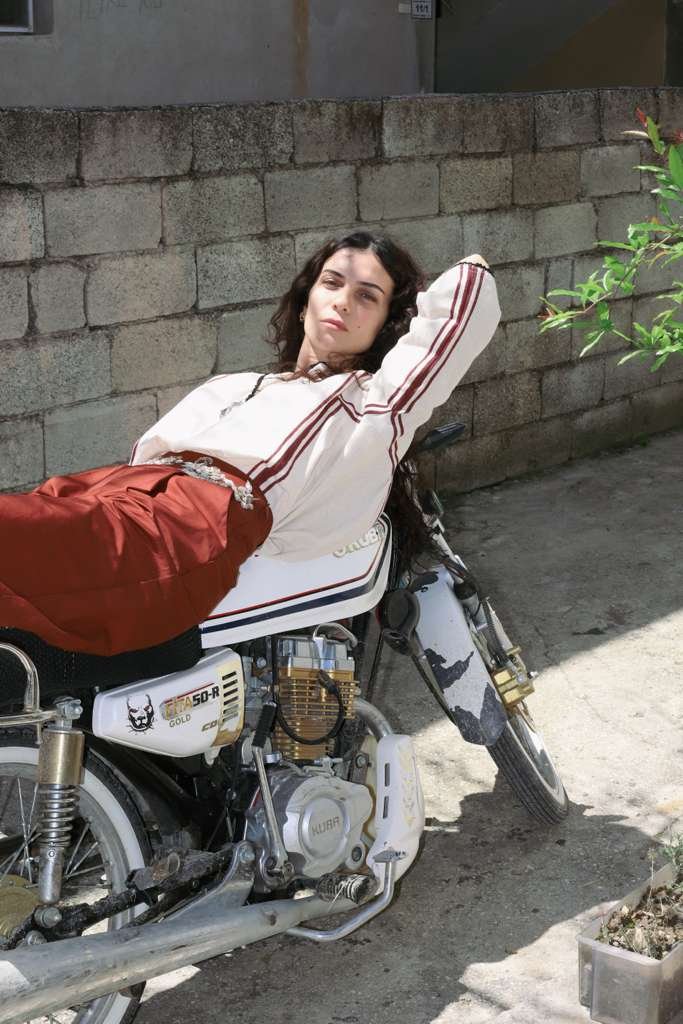
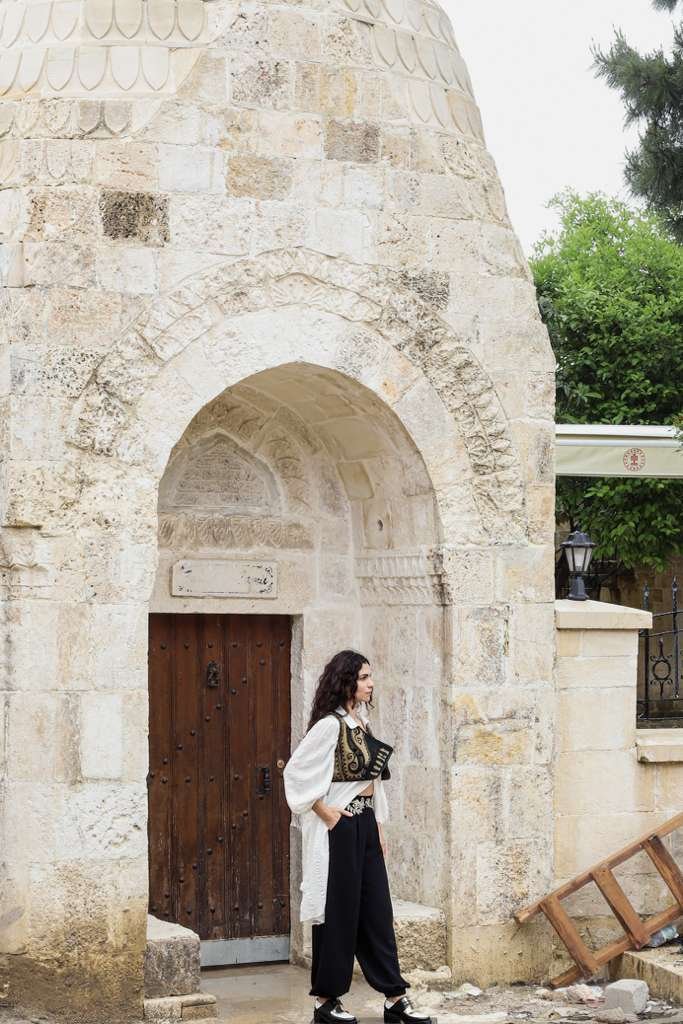
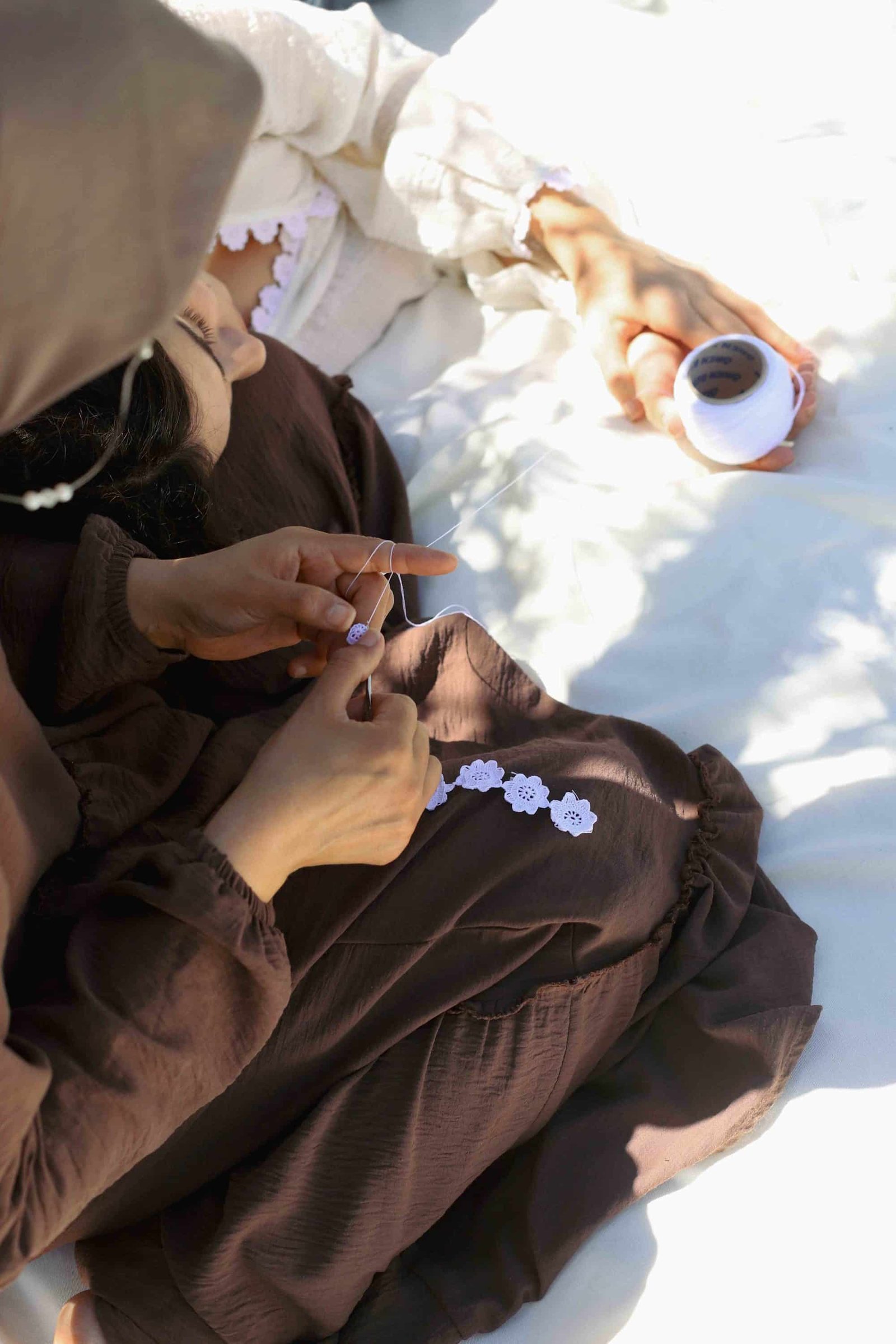
One of the most concrete applications of this approach emerged in Antakya after the earthquakes of February 6, 2023. During Filinta’s research into women’s cooperatives in the region, she encountered cimem, a local craft based on weaving wheat stalks, sustained by a gradually decreasing number of practitioners. Cimem, a small-scale and fragile form of production knowledge, was integrated into a much broader economic system through the combination of design, organization, training, and corporate purchasing mechanisms.
Within the project developed in collaboration with SkinCeuticals/L’Oréal, approximately 10,000 cimem bags were produced; around 350 women in the earthquake region participated in production, and 35 young women were taught this craft. The impact of the project was not limited to production volume and economic income. The fact that women rejoined economic life after the earthquake through a collective production process based on handcraft, that networks of solidarity and coproduction were strengthened, and that craft knowledge was transferred across generations turned the project into a model of social development and community resilience.
The real transformation lies in turning a cultural skill at risk of disappearing into a contemporary production capacity that generates economic and social value. In this way, cultural heritage ceases to be an “object” to be preserved; it becomes a living infrastructure that brings knowledge transfer, women’s employment, collective production, solidarity, commerce, and social development together within the same system.
BİZ Collective and the Horizontal Production Model
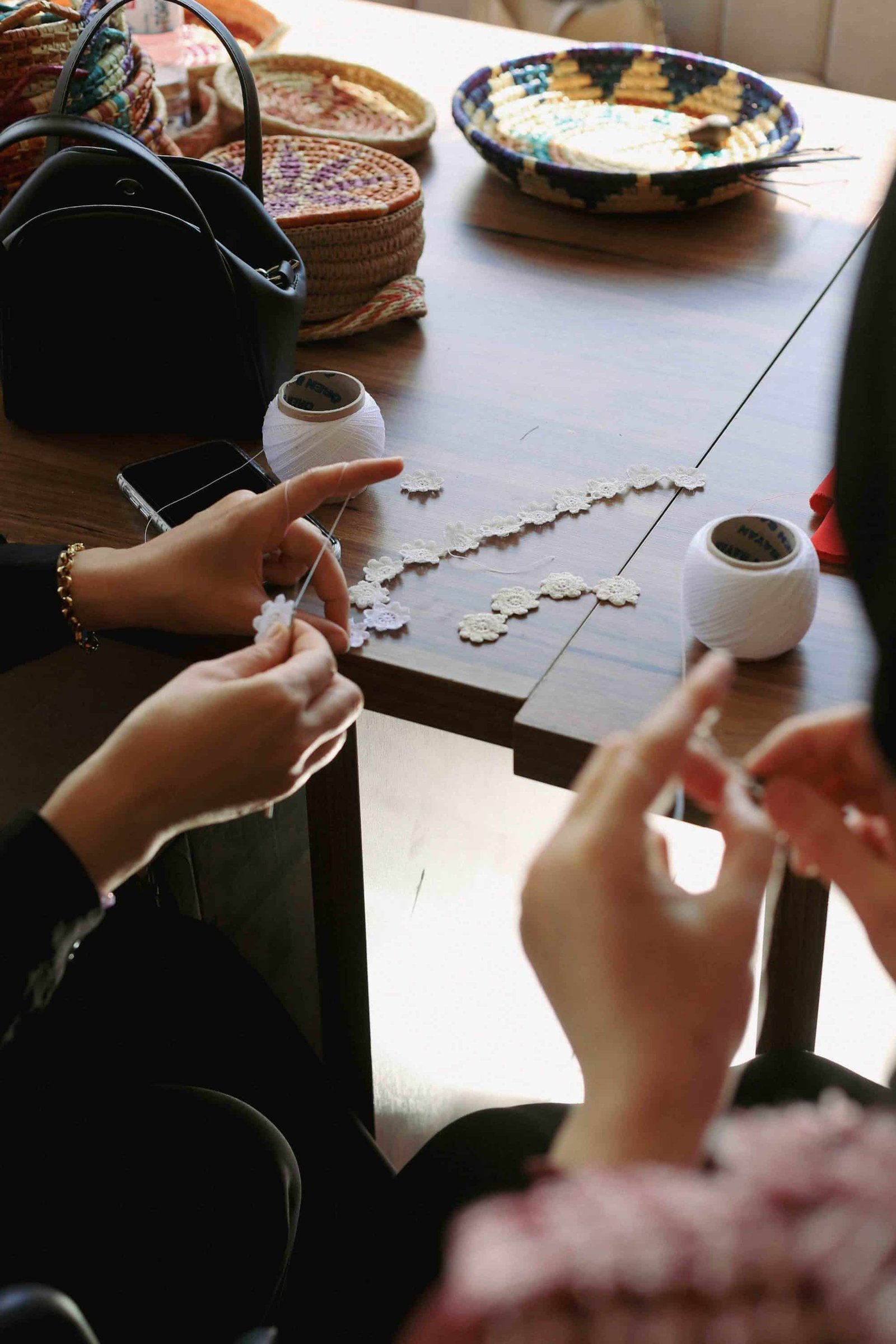
Founded in Antakya in 2025, the BİZ Collective Women’s Cooperative aimed to transform this experience into a more permanent and institutional structure. Beginning with seven founding women, the structure today brings together a broader community of women entrepreneurs, artisans, creative professionals, designers, and different production actors within the same ecosystem.
The article titled “A Turkish Designer Finds the Future in Disappearing Crafts,” published in T: The New York Times Style Magazine, also presents BİZ not merely as a women’s cooperative, but as a visible example of the collective production model developed by Filinta. Writer Feride YalavHeckeroth emphasizes that at the heart of BİZ is a structure in which everyone contributes to the system through their own area of expertise, aiming not at the growth of a single actor, but at “the benefit of the whole.”
This structure operates not as a hierarchical production chain, but as a horizontal network of complementary actors. Creative professionals take part in design and idea-development processes; artisans contribute through knowledge and training transfer; women’s cooperatives participate in production; and brands assume roles in market access and distribution. The aim of the system is not for one actor to extract value through others, but for different competencies to create economic and cultural value together.
The Filinta Methodology defines this structure within a broader framework: cultural heritage, ecological responsibility, collective production, private-sector collaborations, and corporate financing are not independent activities, but interconnected components of the same system.
For this reason, the model also differs from conventional social responsibility projects. Its purpose is not to produce inherently unsustainable “aid,” but to develop structures capable of creating their own economic cycle through cultural knowledge and local production capacity.
The New Definition of Cultural Heritage: Living Economic Infrastructure
The transformation of Aslı Filinta’s design practice over the years raises a broader question about cultural heritage: What does it mean to preserve a culture? Traditional approaches to preservation often rely on documenting, archiving, or safeguarding cultural heritage in museums. Yet in living cultural practices, continuity depends not only on preserving knowledge, but also on ensuring that such knowledge continues to be used. The future of a textile, a craft, or a production technique cannot be secured merely by recording the knowledge of the last master who knows it. What is also needed are new people to whom this knowledge can be transferred, economic conditions under which it can be produced, contemporary areas of use where it can find meaning, and most importantly, the re-emergence of culture as something relevant and desirable. At this point, design can serve not only as an aesthetic bridge between cultural heritage and the market, but also as an economic transformer.
Academic studies on Aslı Filinta’s practice therefore find the relationship between Anatolian cultural heritage and collective benefit particularly significant. One of the main conclusions of the research is that sustainable fashion is not limited to ecological concerns; cultural continuity, social participation, and economic justice must be evaluated within the same system.
A Different Design Language from Anatolia to the World
Today, as global fashion moves increasingly toward a shared visual language through technology and social media, cultural originality has become an important area of differentiation. However, there is a fundamental difference between using cultural references and producing together with culture.
The first approach may use a cultural motif or craft as an aesthetic source. The second approach must consider where that cultural element comes from, who produces it, through which chain of knowledge it has reached the present day, among whom its economic value is shared, and how it will be transferred to future generations.
The international journey that began in 2009 with the Hezârfen Ahmed Çelebi collection reaching Tokyo continued with the presentation of the Mimar Sinan collection in London, the Piri Reis collection at Berlin Fashion Week, and the Nâzım Hikmet collection in Shenzhen, China. It has extended from Mevlânâ to İznik tiles, from Gaziantep’s kutnu textile to the multicultural memory of Zülfaris, and to the wheat stalks brought back to life in the hands of women in Antakya. Yet today, it is not sufficient to define this journey solely through design aesthetics.
In Filinta’s practice, cultural heritage increasingly ceases to be the subject of design and becomes the infrastructure of the production system. The designer, in turn, evolves from someone who creates products into a system designer who constructs the relationships among cultural knowledge, producers, materials, financing, markets, and social benefit. Within this framework, the core proposition of the Filinta Methodology is that design can be used not only to create better objects, but also to design better production relationships. Among the intended outcomes of the methodology are economic revitalization, women’s economic participation, cultural continuity, skills transfer, ecological responsibility, social capital, and a more transparent distribution of value among actors.
In this respect, the design language extending from Anatolia to the world does not propose only an aesthetic identity; it also offers a model for how cultural heritage can continue to live within the contemporary economy. Preserving culture does not have to mean keeping it unchanged. On the contrary, culture continues to live to the extent that it is reproduced, transferred to new generations, and creates economic and social value for the people who carry it.
Therefore, the future of cultural heritage is not only about how well we protect the past, but also about how we design the relationships through which it will continue to live in the future. This approach has enabled Filinta’s work in sustainability and cultural heritage to gain international visibility. Recognized within the scope of Harper’s Bazaar Women of the Year and the ELLE Style Awards, Filinta continues to participate as a speaker at United Nations side events and to give guest lectures at Georgetown University with a focus on Gender, Peace and Security.
The approach proposed by Aslı Filinta’s nearly two-decade-long practice is positioned precisely here: to introduce Anatolian culture to the world is not merely to make it visible, but to keep it alive within a structure that creates value in the geography where it was born, does not leave people and nature outside the system, and recirculates the value created for “the benefit of the whole.”
This article was first published in İş’te Kadın, the magazine of the Association of Business Women in İzmir (İZİKAD), September 2026 issue, pages 18–25. Photographs: Berk Kır.