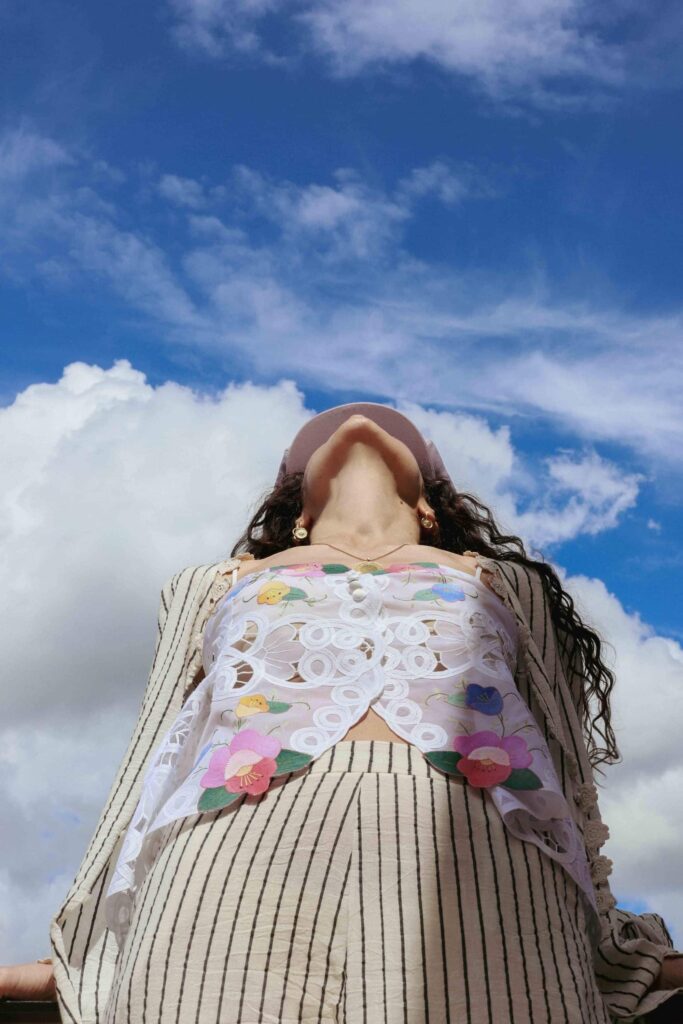
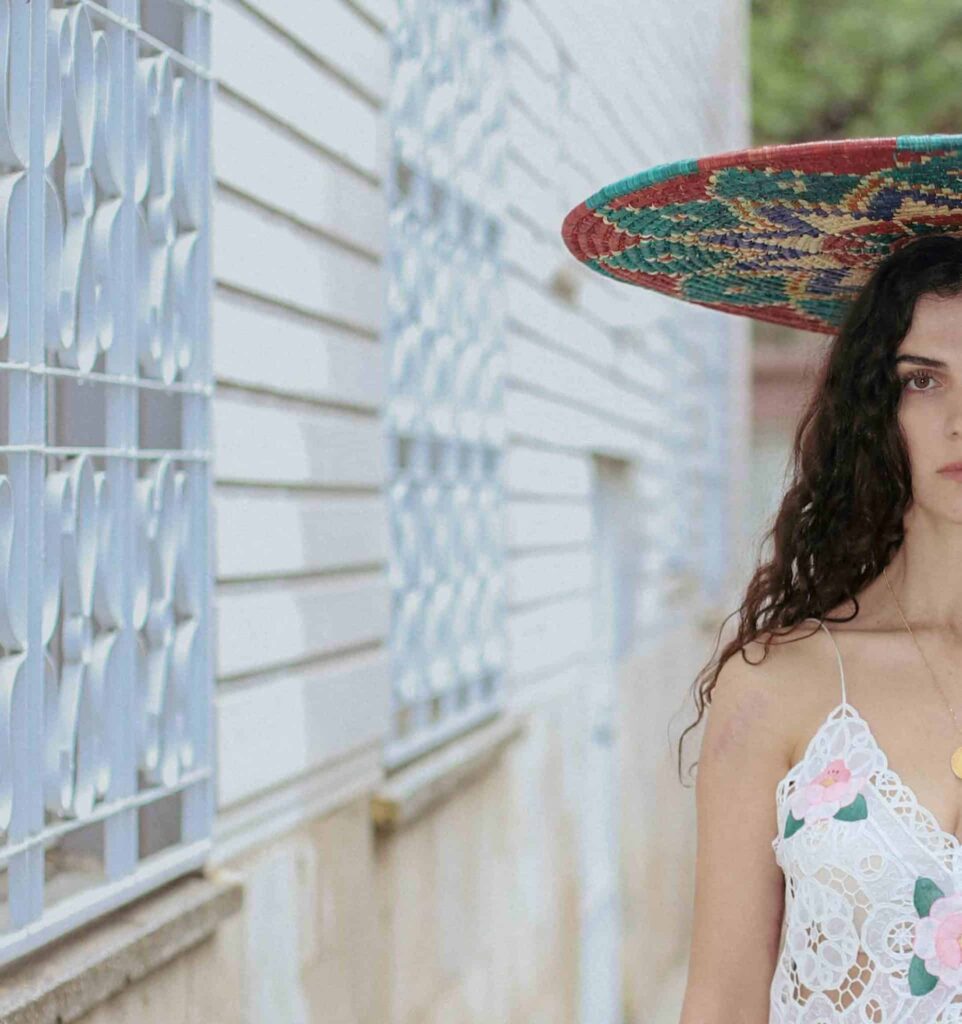
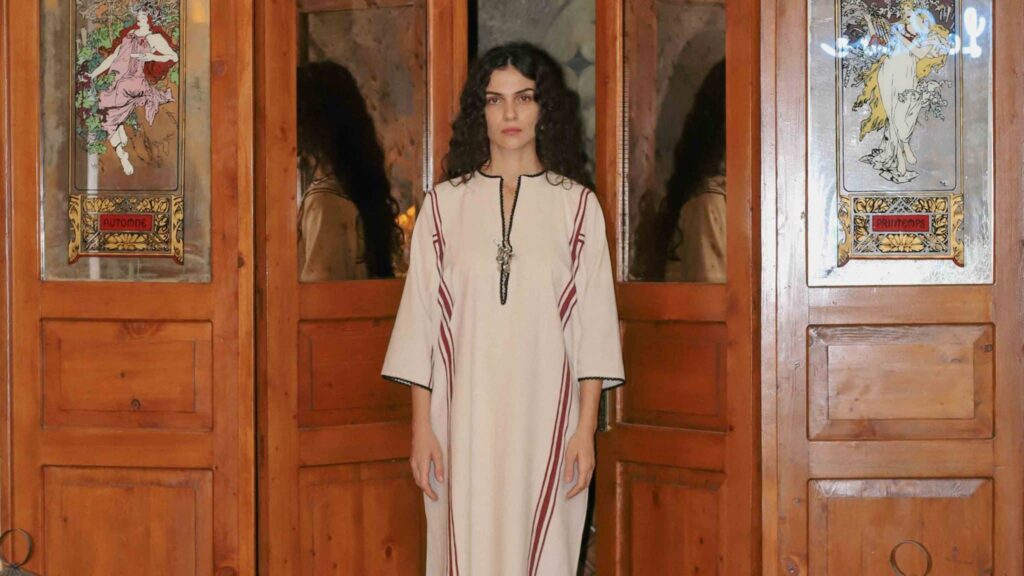
A model wears a cream tunic dress finished with red woven stripes and black trim. Image Credit: Berk Kır.

When Aslı Filinta presented her collection at Fashion Week Istanbul in 2019, her pioneering intent, deeply informed by the diversity of her Turkish roots, became clear. Models walked through the sanctuary of the historic Zülfaris Synagogue in garments from Filinta’s world, some with custom-made floral crowns, and all accompanied by live bağlama music. Traditional dowry embroidery, or çeyiz, Kutnu fabric and tel kırma textiles, a technique of weaving and bending flat metallic wires onto fabric, were upcycled into tiered dresses, asymmetric capes and matching sets.

For a designer who had previously drawn inspiration from Rumi’s tale “The Paragon Parrot” and the works of the great Ottoman architect Mimar Sinan, the 2019 runway show appeared to be the culmination of her practice: a showcase of the designer’s evolving creative language, one that embraces her land fully without differentiating between religion, ethnicity or politics.

Years later, living between California and Turkey, Filinta has not budged from this path. Strengthening her conviction is the BİZ Collective, founded in 2025 in Antakya, a region that continues to carry the deepest scars of the 6 February 2023 earthquakes. While travelling through the region and researching women’s cooperatives, Filinta discovered traditional cimem weaving, a fading craft that uses natural wheat stalks to create handmade goods.

Following the completion of the cimem project, the Filinta Methodology and BİZ continue through the clothing of Aslı Filinta, the collective brand. The collection includes a one-of-a-kind lace dress covered in blooming flowers, meticulously hand-embroidered by skilled women artisans and reflecting generations of Anatolian craftsmanship and cultural heritage. Made to order, it takes up to three weeks to produce.

There is also a ready-to-wear, long-sleeved artisanal shirt with hand-crocheted details, which supports women in disadvantaged regions. These are “Pieces that carry a whole vanishing world inside them,” as Filinta likes to call them.

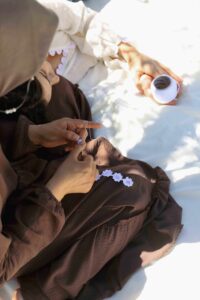
An artisan crochets a white floral trim onto a brown garment as another participant holds a spool of thread. Image Credit: Berk Kır.
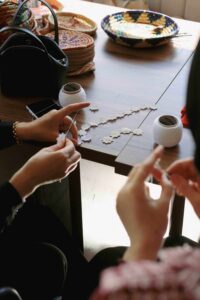
Artisans crochet white floral motifs at a workshop table, with woven baskets and finished pieces arranged nearby. Image Credit: Berk Kır.

What began with 30 uniforms grew into the production of 20,000, supported by volunteers ranging from housewives with sewing machines at home to members of the Fashion Designers’ Association, large textile firms and retail giants.

“I have witnessed, firsthand, that when you do the right work, the system itself begins to support you. So, we did the only sensible thing: we added Collective Production to our working methodology, learning, as always, by living it,” says Filinta. “We took what we learned, put it in our pocket, and kept walking…into the earthquake region, and beyond.”

The colourful uniforms, each with a small evil-eye bead sewn in, carried no label or brand. They were an act of the heart, much like every piece Filinta designs today.

 
WhatsApp ile iletişim